Four Simple Steps to Protect Pollinators
Grow Pollinator-Friendly Flowers
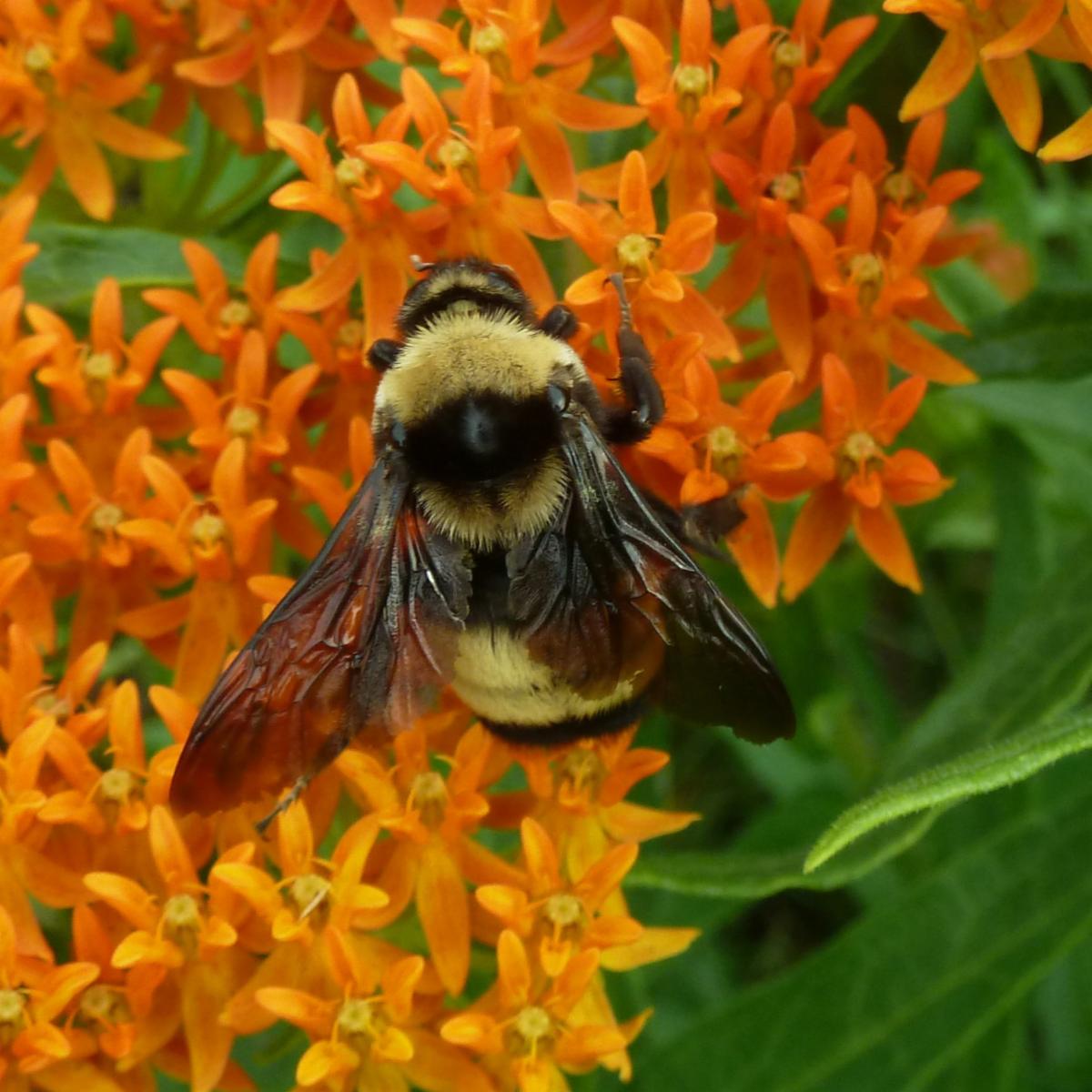
Flowers provide the nectar and pollen resources that pollinators feed on. Growing the right flowers, shrubs, and trees with overlapping bloom times will support pollinators from spring through fall.
Learn More
Provide Nest Sites
It is important to support all pollinator life stages, including eggs and larvae! For bees, leave patches of bare ground and brush piles, have plants and shrubs with hollow or pithy stems, or install nesting blocks. For butterflies and moths, plant their caterpillar host plants.
Learn More
Avoid Pesticides
Pesticides, especially insecticides, are harmful to pollinators. Herbicides reduce food sources by removing flowers from the landscape. Fungicides can also have negative effects on bees. There are safer ways to manage issues!
Learn More
Spread the Word
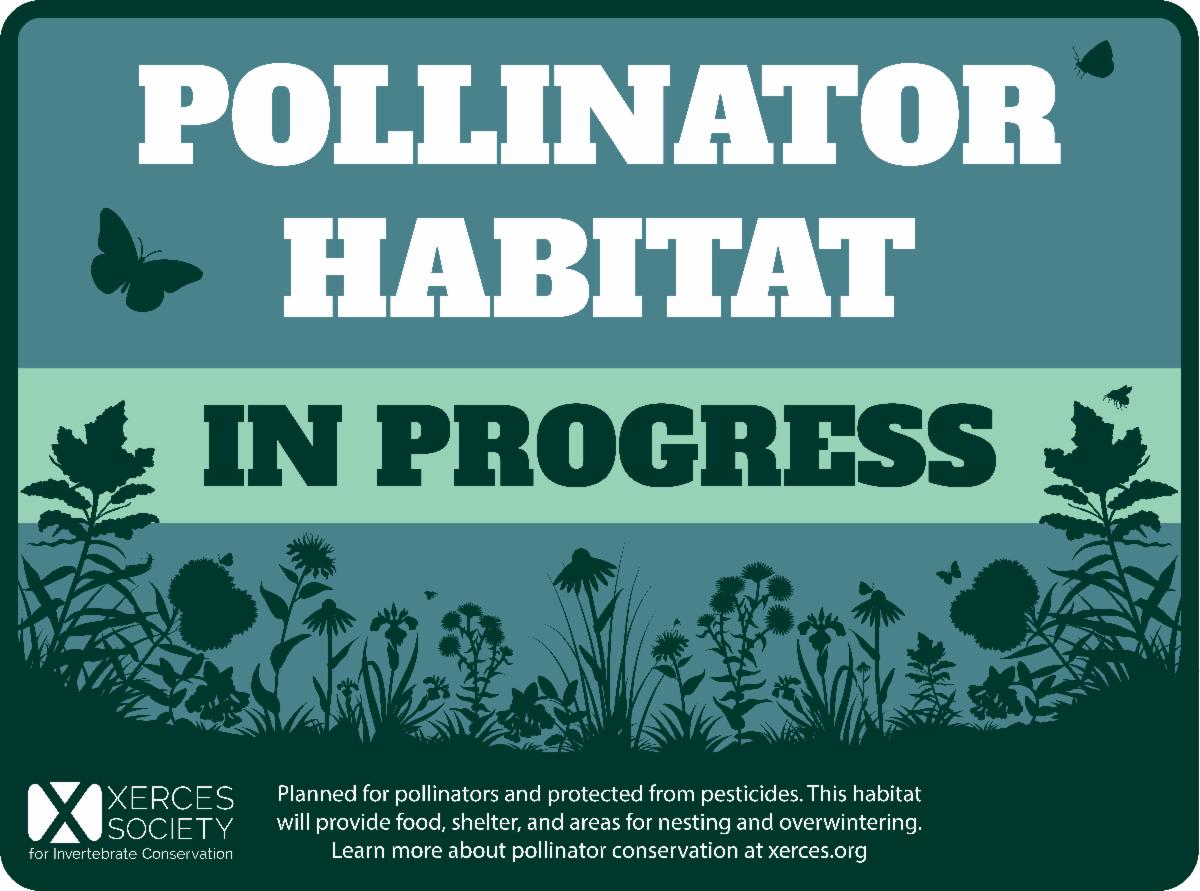
Make your commitment both official and visible by signing the Pollinator Protection Pledge! You can also share information about pollinators on social media, talk with your neighbors, or spread the word with a pollinator habitat sign or pesticide-free sign.
Learn More |





 North Carolina Small Farm Association