| If there is a poster child for invertebrate conservation, it may be the monarch butterfly. Although greatly diminished from their former numbers, and with disappointing totals reported from this year’s overwintering counts in Mexico and the western U.S., they are also at the center of an enormous groundswell of support. To name just a few: a decision for listing under the Endangered Species Act is anticipated later this year, the Xerces Society is engaged in a tri-national coalition to build solutions across borders, and—most importantly—countless volunteers are planting gardens, tracking butterflies, and advocating for protections across the range. If we work together, there is still time to save this iconic migration. |
|
|
The annual census of monarch numbers at the overwintering sites in central Mexico was released by World Wildlife Fund-Mexico and partners. It revealed that in just one year, the presence of monarch butterflies in their Mexico wintering grounds dropped by more than half, from 2.2 hectares to 0.9 hectares. This makes 2023-24 the second worst year ever recorded.
“I am very concerned with the monarch numbers out of Mexico this year,” said Xerces Society Director Scott Black. “We need to move forward on listing monarchs under the Endangered Species Act in the U.S., to maximize protection and restoration of habitat across the monarch’s range and take action to protect these animals from toxic pesticides.” Learn more. |
|
|
|
| Western Monarch Count Tallies 233,394 Butterflies
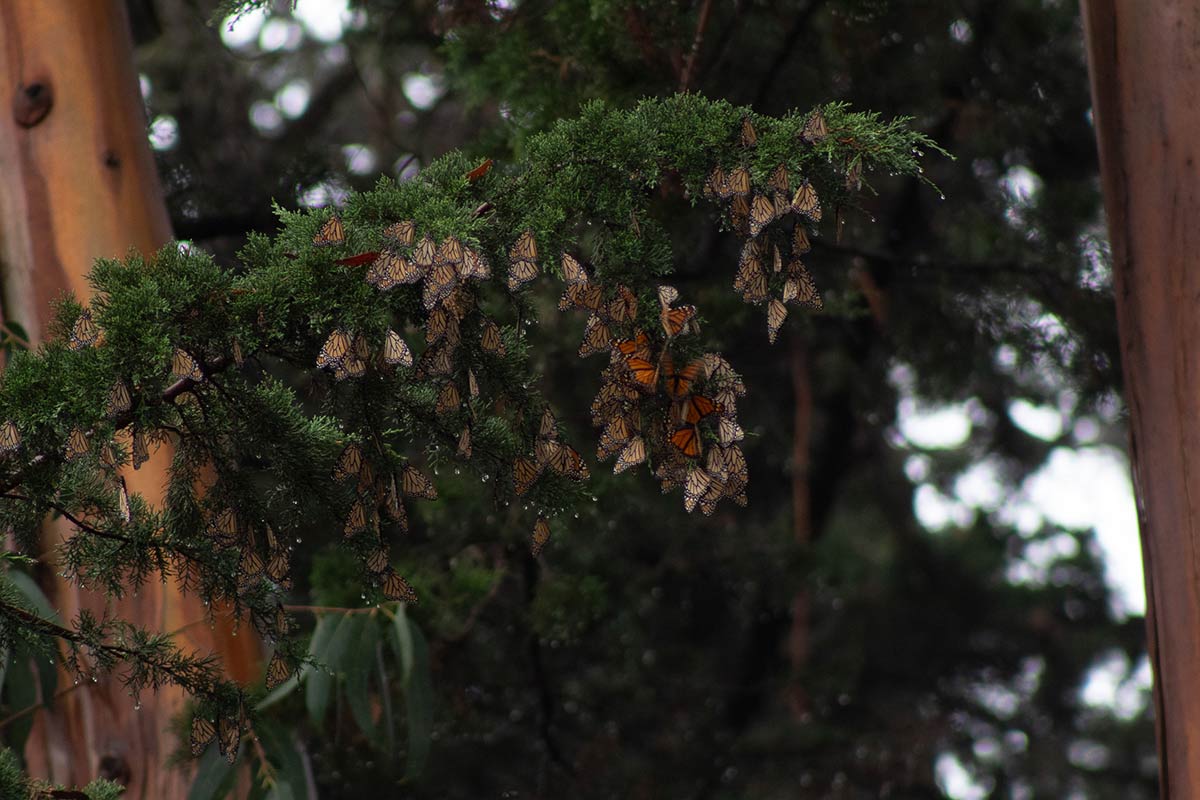
The 27th annual Thanksgiving count totaled 233,394 butterflies across 256 overwintering sites in the western United States. This tally is slightly lower than last year’s, yet similar to the 2021 count. The overwintering population of western monarchs remains at approximately 5% of its size in the 1980s. Learn more. |
|
| Western Monarch Call to Action
This Western Monarch Call to Action aims to provide a set of rapid-response conservation actions that, if applied immediately, can help the western monarch population bounce back from its critically low overwintering size. See a map of the priority action zones and learn five key steps to protect western monarchs. Learn more. |
|
| Xerces is a donor supported non-profit organization. Your tax-deductible donation today will help grow and sustain our essential work.
Join or Renew your membership today!
Start a fundraiser to protect invertebrates. |
|
|
| Donation Mailing Address:
The Xerces Society
PO Box 97387
Washington DC, 20090-7387
If you need us, email us at membership or call us at 855-232-6639, option 2. |
|
| Banner photo: Isis Howard, Xerces Society
Body photos: Natalie Johnston, PGMNH
Copyright © 2024 The Xerces Society |
|
|
|
|
|







 North Carolina Small Farm Association