
Having trouble viewing this email? View it as a Web page.
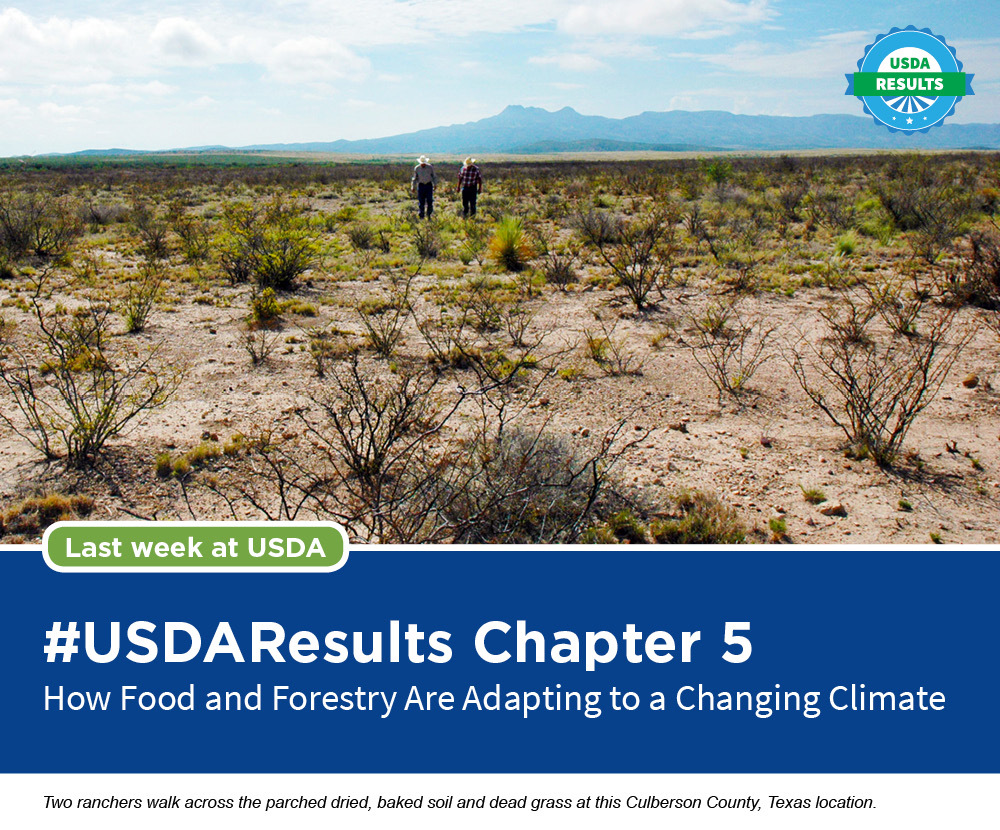
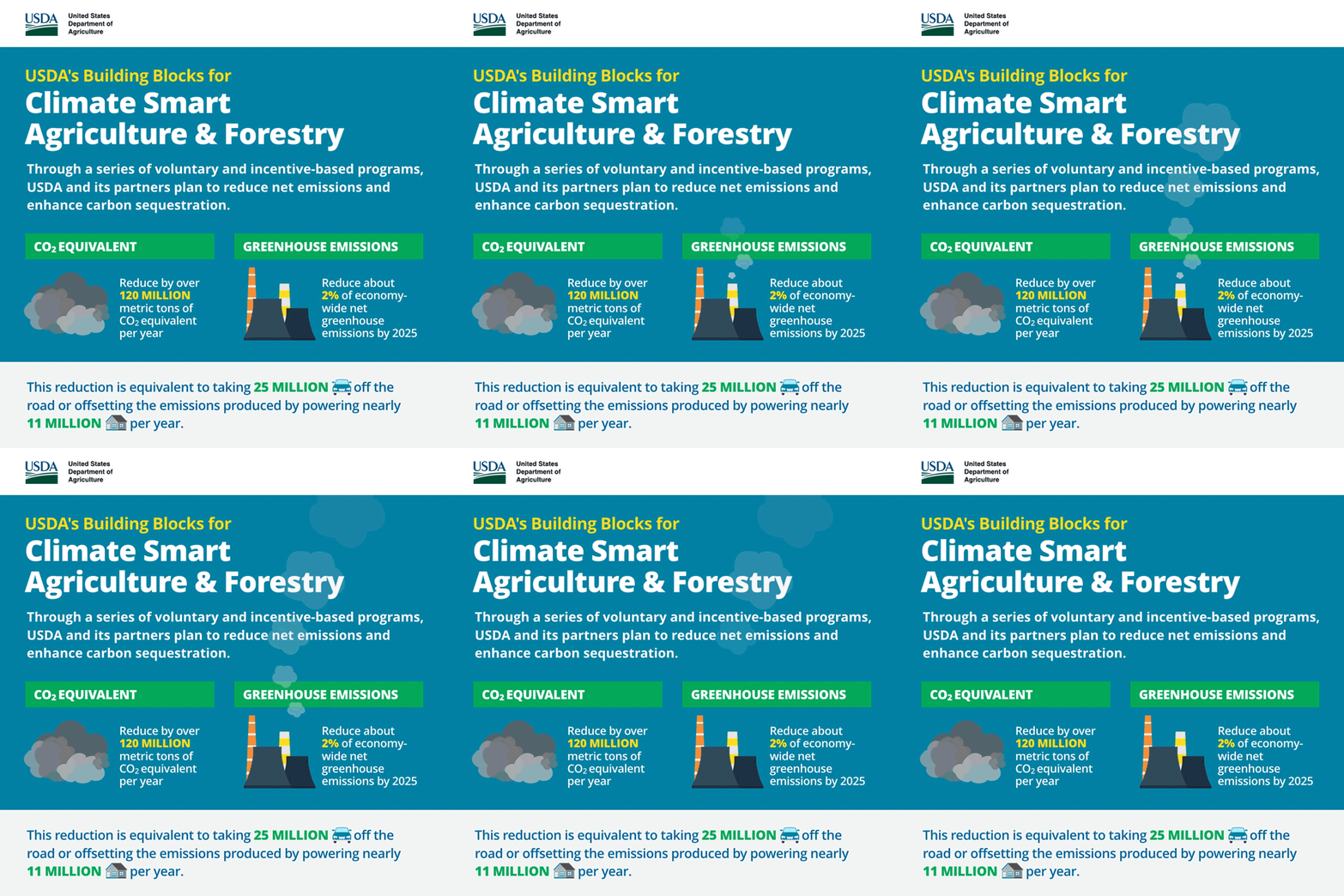
As part of our commitment to a healthier planet for future generations, USDA is working on innovative strategies to reduce pollution while helping farmers, ranchers and forestland owners adapt to the intensifying impacts of climate change. Last week, we shared the first results of USDA’s Building Blocks for Climate Smart Agriculture and Forestry. A year after the plan was originally unveiled, you can read the progress report and see how these building blocks are working on the ground by exploring a series of case studies on our website: http://usda.gov/climate-smart.html. You can also hear directly from farmer Bob Giacomini who operates a 720-acre family-run dairy in Marin County, CA. Like farmers across the State, his farm has faced record drought, which is why he’s making sure it is at the forefront of conservation. Through a comprehensive set of voluntary programs and initiatives USDA expects to reduce net emissions and enhance carbon sequestration by more than 120 million metric tons of carbon dioxide equivalent per year by 2025. This reduction is the equivalent of taking 25 million cars off the road or offsetting the emissions produced by powering nearly 11 million homes per year. A new $72.3 million investment will also boost carbon storage in healthy soils. Join us throughout the month of May as we take a look at how USDA’s approach to collaborative and climate smart policies have supported farmers, ranchers and forest landowners as they adapt in the face of a changing climate. Follow along on usda.gov, on the USDA blog and by using #USDAResults, or catch up on Chapter IV on our Medium site.
In May we’ll take a look at how USDA’s approach to collaborative and climate smart policies have supported farmers, ranchers and forest landowners as they adapt in the face of a changing climate. |

 North Carolina Small Farm Association