Having trouble viewing this email? View it as a Web page.
  
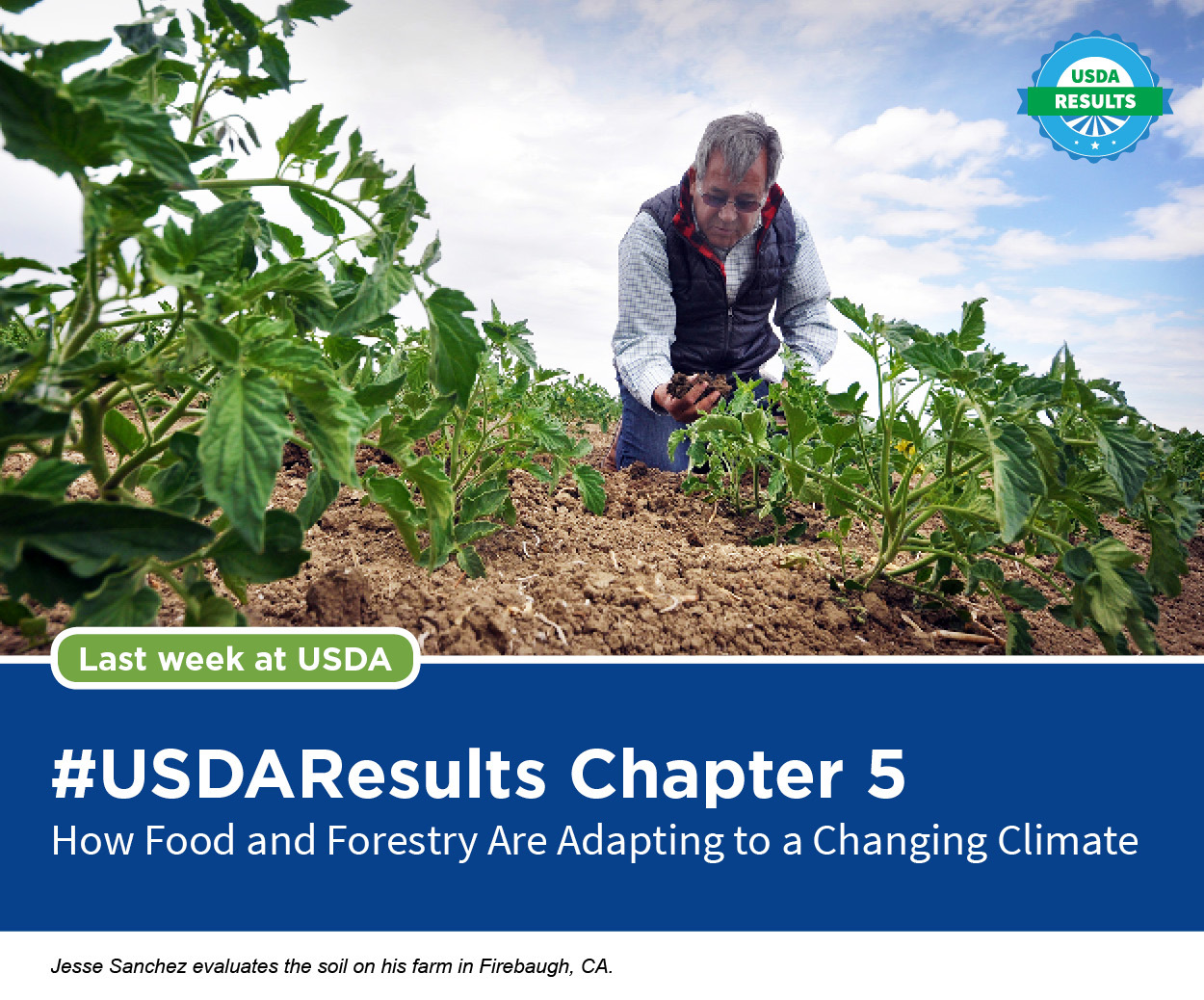
Our nation’s farmers, ranchers, and forest landowners have proven they can achieve extraordinary gains in productivity while acting as good stewards of our natural resources. Along with our partners, we will continue to demonstrate that climate-smart strategies can be voluntary, build resilience, reduce global greenhouse gas emissions and increase carbon storage in our soils and forests while boosting productivity and improving global food security. Last week we announced the enrollment of more than 800,000 acres in the Conservation Reserve Program (CRP). CRP helps farmers offset the costs of restoring, enhancing and protecting certain grasses, shrubs and trees that improve water quality, prevent soil erosion and strengthen wildlife habitat. Since 1985, USDA’s Conservation Reserve Program has sequestered an annual average of 49 million tons of greenhouse gases, equal to taking 9 million cars off the road and prevented 9 billion tons of soil from eroding, enough to fill 600 million dump trucks. Join us throughout the month of May as we take a look at how USDA’s approach to collaborative and climate smart policies have supported farmers, ranchers and forest landowners as they adapt in the face of a changing climate.
USDA RESULTS: Follow along on usda.gov, on the USDA blog and by using #USDAResults, or catch up on Chapter V on our Medium site. |


 North Carolina Small Farm Association