
Having trouble viewing this email? View it as a Web page.
  
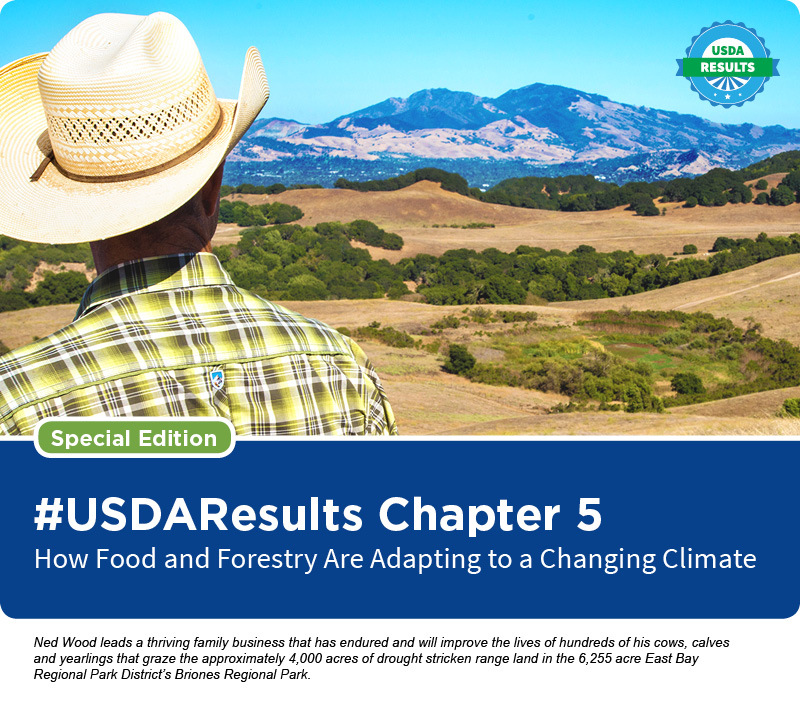
America’s farmers are resilient, having faced and overcome challenges throughout our history. Today, we face a new challenge in the form of a shifting climate. Our nation’s agricultural producers and land managers have continued to see the rising threat of climate change year after year: from historic droughts to stronger and more frequent storms; from a rise in invasive species and costs for weed and pest control to increasingly intense wildfires that rip through our nation’s forests and grasslands. These threats have real and significant implications for U.S. agricultural production, forest resources and rural economies. As these risks continue to grow, our food supply and those who produce it will be faced with more and more challenges that necessitate adaptation and transformation. Faced with these obstacles, USDA has worked with our partners to develop innovative strategies that will help contribute to President Obama’s goal of reducing emissions by 28 percent by 2025. Agriculture’s efforts will reduce net emissions by the equivalent of taking 25 million cars off the road or offsetting the emissions produced by powering nearly 11 million homes per year. Join us throughout the month of May as we take a look at how USDA’s approach to collaborative and climate smart policies have supported farmers, ranchers and forest landowners as they adapt in the face of a changing climate.
Follow along on usda.gov, on the USDA blog and by using #USDAResults, or catch up on Chapter V on our Medium site. |


 North Carolina Small Farm Association